What are oak galls?
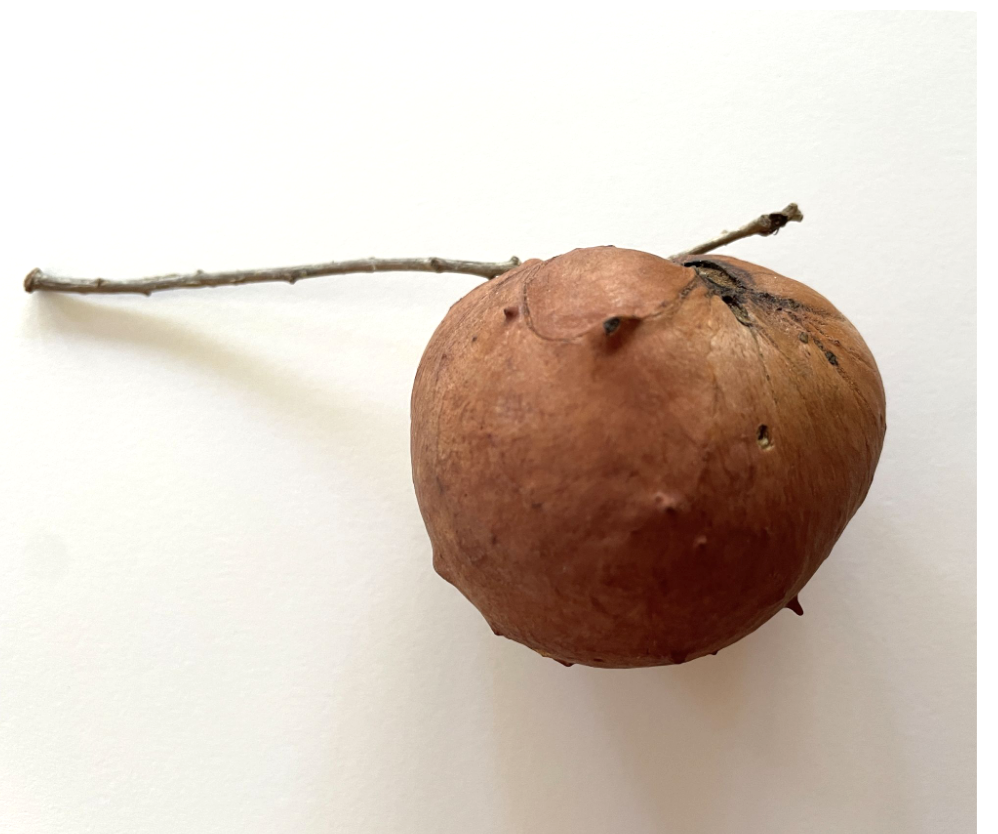
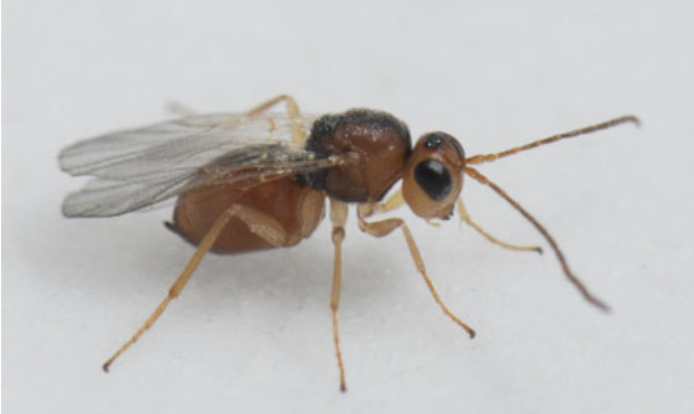
Oak galls are formed on the branches of oak trees when the adult female gall wasp inserts her eggs into the flesh of the oak's limbs, which causes the area to swell. These deformities are better known as galls, and help to protect and feed the developing wasp larvae that hatch inside. Although they are sometimes referred to as plant tumors, these growths are not harmful to the oak. Galls made by this particular wasp can grow to the size of a small baby's fist, and to the untrained eye look like apples (which is why they are often referred to as oak apples). The eggs overwinter in the gall on the twig, and then hatch in the spring, usually in early April. The resulting larvae induce galls immediately, where they can seem to balloon almost overnight onto the tree. After anywhere from a few weeks to two months, the gall stops growing and begins to desiccate, turning tan or brown. The larvae pupate and then bore their way out of the gall in late summer or early fall and fly off to lay eggs in other trees. You’ll see their exit holes on galls that are no longer inhabited by eggs or larvae.
Can you find oak galls in the Los Angeles area?
Yes! Look in and under coastal and valley oaks for oak galls - they look like apples. Fall and winter are the best times to forage for oak galls because they are no longer being used by the insect larvae. Oak galls that you find on the ground can be foraged anytime. They vary in color according to age. Newer galls are brownish red and old galls are dark brown or black. All colors contain tannins and can be used to make ink.
Why are oak galls used to make ink?
The galls are rich in tannins.
What are tannins?
Tannins (or tannoids) are found in tree barks, nuts, seed pods and leaves, grapes (wine), and tea. Some plants and trees, like oak trees, contain a better quality and concentrated amounts of tannins. Tannins are weak acids and are somewhat astringent. This unpleasant astringency helps protect the plant from insects and predators.
Tannins help dyes/pigments resist fading, in fact they darken after a lengthy exposure to light. Tannins protect natural colors from UV light as they do for the plant.
(IRON) OAK GALL INK
What is (iron) oak gall ink?
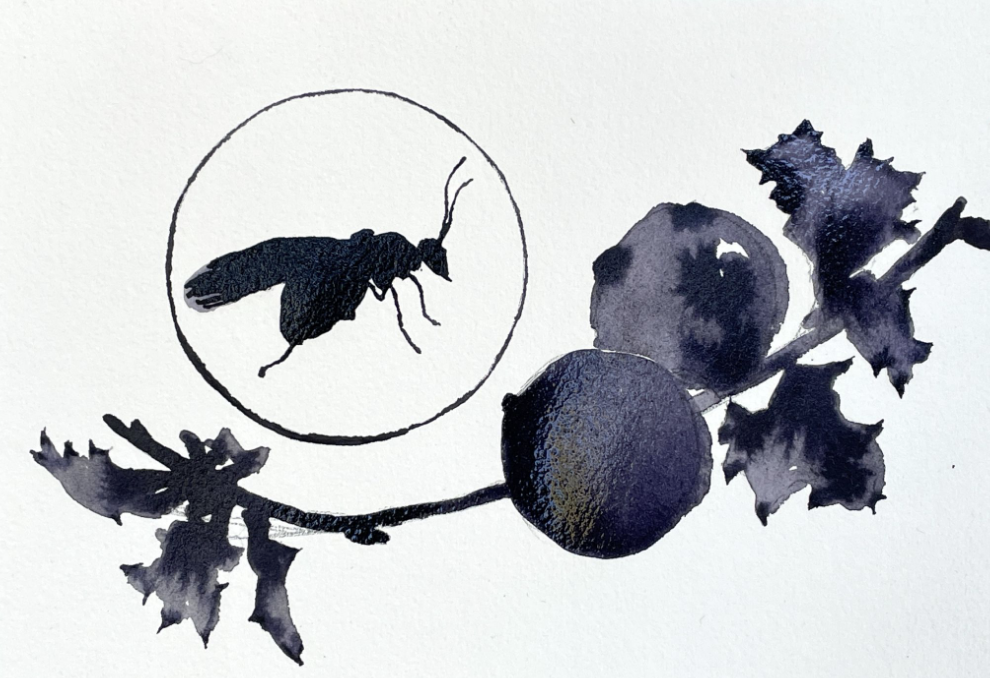
Oak gall ink painting by Kim Russo
Ink has its origins around 4500 years ago, and was invented by both the Egyptians and the Chinese around the same time. The very first inks used charcoal or soot from the fire as the main pigment, hence why most of the early written works found were written in black ink.
In the 5th century A.D., a popular ink recipe was created and used for centuries - through the 19th century - and is still made and sold today: oak gall ink. Iron salts, or ferrous sulfate (made by treating iron with sulfuric acid), were mixed with tannin from oak galls and a thickener. When first put to paper, this ink is bluish- black. Over time (hundreds of years) it fades to a dull brown.
Oak gall ink fell out of widespread commercial and administrative use in the latter half of the 20th century as modern, chemically produced dye-based inks became the standard. However, official government specifications for the ink remained in use in Germany until 1974.
While it is largely obsolete for everyday purposes today, it is still manufactured by a few specialty companies, made by natural pigment artists, and is required for specific religious documents under Jewish law.
Galls tannins + Ferrous Sulfate = black ink
Ferrous sulfate and tannic acid create a chemical reaction, the result of which is ferric tannate upon exposure to oxygen. You will notice that your ink gets darker as it is exposed to air on your paper.
Feather Quill Tips
The "Dip and Wipe" Technique: Dip only the bottom 5 millimeters 1/8 inch) of the tip into the ink. Lightly touch the tip to the inside rim of your inkwell to remove excess ink and prevent large blots on your paper.
Writing Angle: Hold the quill at a shallower angle (around 30 to 45 degrees) relative to the paper. This uses gravity to pull the liquid smoothly without scratching the surface.
Cleaning the tip: Rinse the tip with water and dry it carefully with a paper towel. Don’t allow the tip to sit in ink or water - this will soften the tip and it will cease to write.
(Iron) oak gall ink info + recipe
Is Oak Gall Ink toxic?
While occasional skin contact or accidental ingestion of tiny amounts is generally harmless, consuming large quantities is dangerous due to its chemical makeup.
The primary ingredients driving its toxicity:
Tannic Acid: Oak galls are rich in tannins (which are also found in red wine and tree bark). While safe in small amounts, pure tannic acid can be bitter, is toxic to microbes, and can cause stomach irritation if ingested in large doses.
Iron Salts/Oxides: The ink is made by binding tannins with iron (historically using iron sulfate or rusty metals soaked in vinegar). Consuming high amounts of iron can lead to iron poisoning.
Acidity: The ink is highly acidic, which is why it can be corrosive to metal dip pens and paper over time. It should never be used in modern, standard fountain pens.
(Iron) Oak Gall Ink Recipe
Many historical re-creations rely on an established 1770 recipe. This recipe makes about 2 cups of ink. You can make a half or quarter recipe if you desire less ink.
2 oz. crushed dried oak galls
1 oz. iron sulfate (ferrous sulfate) - you can purchase this on-line
½oz. gum Arabic powder - you can purchase gum Arabic powder on-line
1 pint (16 oz.) rainwater (or distilled/deionized water)
Step-by-Step Preparation
Prepare the Galls: Crush the dried oak galls into a fine powder or small fragments using a mortar and pestle, hammer or rolling pin.
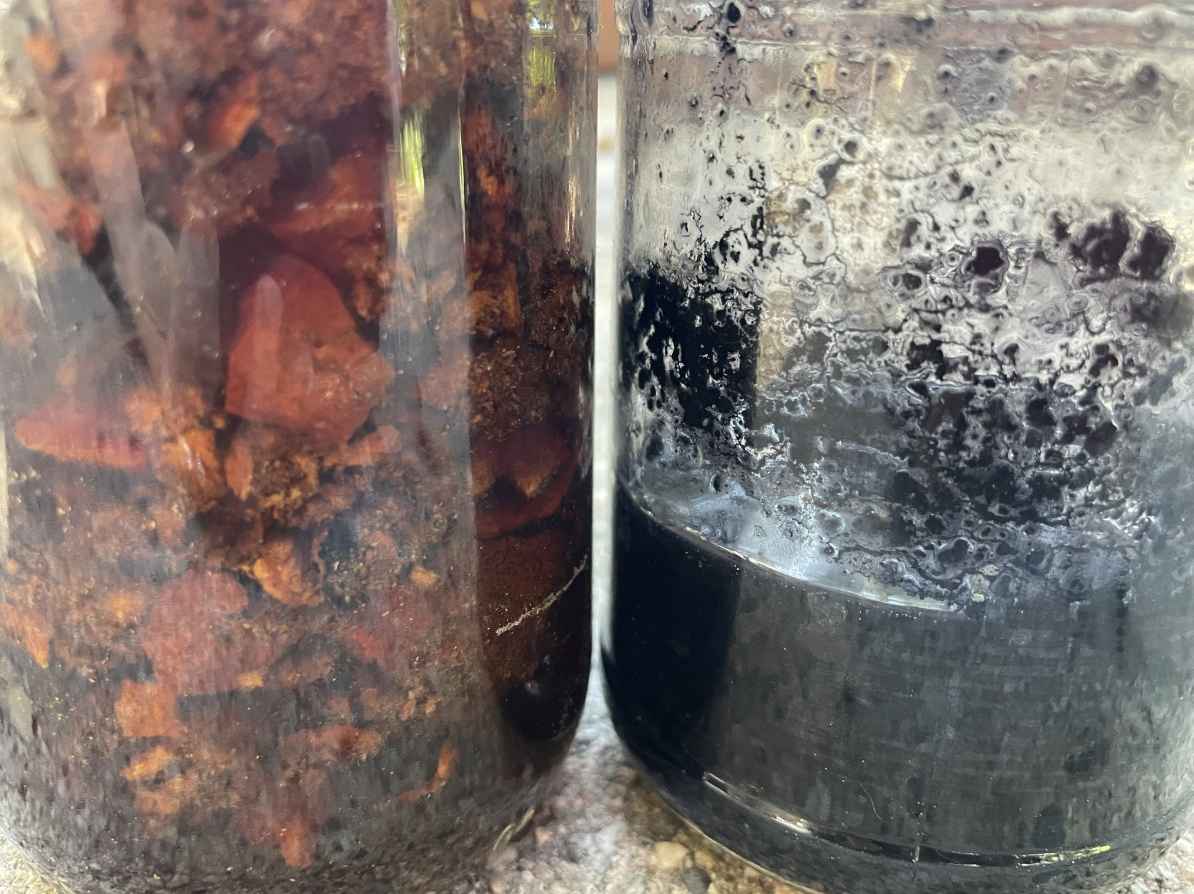
Steep: Soak the crushed galls in your pint of water inside of a jar. You can let it steep at room temperature for 1 to 4 days, or gently simmer it for 30 to 60 minutes until the liquid resembles a strong tea.
Filter: Strain the mixture through cheesecloth or a coffee filter into a non-reactive (glass) jar to remove all solid particles.
Add Iron: Stir the iron sulfate into the warm oak gall extract until completely dissolved. The brown solution will immediately turn black.
Thicken: Dissolve the gum Arabic powder in a small amount of hot water, then stir it into your ink mixture. This binder helps the ink adhere to paper.
Preserve (Optional): Add a splash of vinegar, a splash of red wine, or several drops of clove essential oil to prevent molding.
Bottle: Store the finished ink in an airtight glass jar.
Color Change:
When first applied to paper, the ink will look pale and watery or a light brown. As it oxidizes in the air, it will magically turn a deep, permanent black.
Feather Quill-Specific Ink Recipe Adjustments
Adjust Gum Arabic: Cut the gum Arabic by half (use ¼ oz instead of ½ oz). Too much binder makes ink gummy, causing it to stick to the feather slot and refuse to flow down the slit.
Warm the Mix: Ensure the ink is at room temperature or slightly warm during mixing to fully dissolve the ingredients, which prevents microscopic grains from clogging the quill's hollow channel.
How to remove stains
Oak gall ink is corrosive because of the ferrous sulfate, and will eventually eat the paper (long after you're gone - not right away.) It is also highly staining. Help with removing stains from hands and clothing is below.
Stains on fingers and hands:
Since oak gall ink contains natural tannins and iron that bind tightly to the skin's proteins, you can use several methods to break down and lift the pigment:
Wet your hands. Take a tablespoon or two of baking soda and rub it over the stained areas. The abrasiveness of the baking soda will loosen the pigment from your skin. Rub in liquid dish soap before applying more water. This loosens the ink molecules from your pores.
Mechanical Exfoliation: Gently buff the stain using a Pumice Stone, mechanic's hand soaps like Lava or Gojo, or a sponge with a scrubbing side while washing your hands.
Alcohol or Hand Sanitizer: Rubbing alcohol breaks down the natural oils in the skin and releases the ink color. Dab it onto a cotton ball or pad and gently press it against the stain.
Acids (Lemon Juice or Vinegar) can also help remove the ink stain from your skin.
Stains on clothing or fabric
Follow these steps to safely lift the ink stain:
Test first: Apply your cleaning solution to a hidden seam or inconspicuous area of the fabric to ensure the color doesn't bleed.
Soak in cold water: Place the stained garment in a basin of cold water to loosen the ink.
Apply an acid solution: Mix a solution of equal parts white vinegar and water, or a citric acid chelating agent. Gently dab or soak the stain to break down the iron compounds in the ink.
Blot, do not rub: Place a clean, dry towel or cloth behind the stain and gently blot the stain from the outside edges inward to prevent spreading.
Wash with safe bleach: The remaining colored dye can usually be removed by applying a color-safe bleach (like Clorox bleaches or OxiClean stain removers).
Launder and air dry: Wash the garment in cool water according to its care label instructions. Do not place the clothing in the dryer until you are certain the stain is completely gone, as heat can permanently set the ink.